Risk Intake
Capture work height, walking surface, edge exposure, available anchorage and rescue expectations in plain language. The goal is to avoid a generic harness quote when the actual concern is clearance, swing fall or connector compatibility.
Fall protection buying often gets messy because the hazard description, the connector choice, the rescue expectation and the inspection record live in different conversations. This service page keeps those pieces together. It is designed for EHS managers, plant teams, distributors and sourcing groups that need a practical way to turn a work-at-height brief into a defensible product shortlist. The approach is intentionally narrow: identify the task, map the equipment family, confirm the standards references and package the handoff so the buyer does not have to rebuild the logic later.
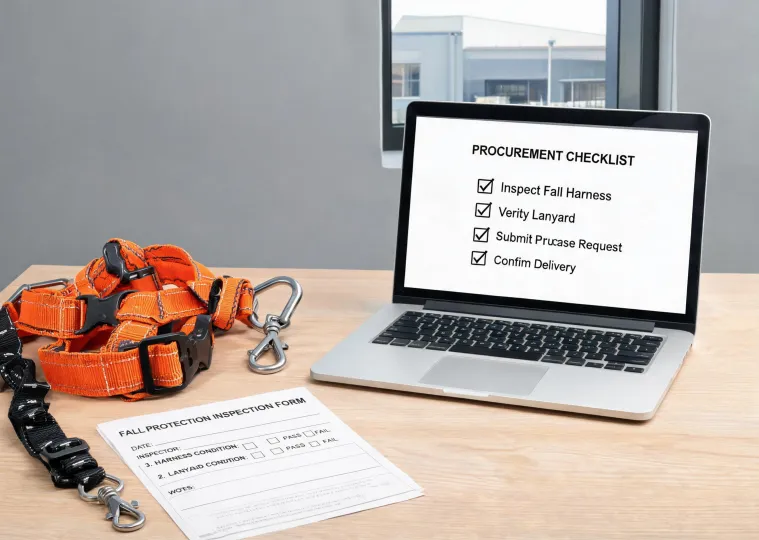
Capture work height, walking surface, edge exposure, available anchorage and rescue expectations in plain language. The goal is to avoid a generic harness quote when the actual concern is clearance, swing fall or connector compatibility.
Translate the intake into full body harness, lanyard, SRL, anchor, carabiner and lifeline families. Static notes can include ANSI/ASSP Z359.11-2021 harness references, OSHA 1926.502 planning language and 5,000 lb anchorage guidance.
Prepare a concise handoff for supervisors covering pre-use checks, service-life review, removal triggers and recordkeeping cadence. The note avoids promising product approval from OSHA and keeps compliance language tied to the workplace program.
Package the chosen category, requested quantity, user sizes, lead-time constraints and documentation needs so the distributor or purchasing desk can respond without asking the same technical questions twice.
A guided service flow is useful only when it reduces rework. These questions keep the early conversation centered on the conditions that change product choice: clearance below the worker, allowable free fall, connector gate style, exposure to edges, rescue access and how inspections will be recorded after the order arrives.
Multiple SKU lists, unclear sizing, missing anchorage notes, scattered inspection language and a quote that looks cheap until the site asks for the documents that should have accompanied the equipment.
A compact shortlist with harness family, lanyard or SRL type, anchor requirement, service-life notes, inspection handoff and the unresolved questions clearly marked before release.
The reply can focus on the decision blocks that matter instead of asking for a full product spreadsheet. Include task type, quantity, tie-off conditions and timeline when available.